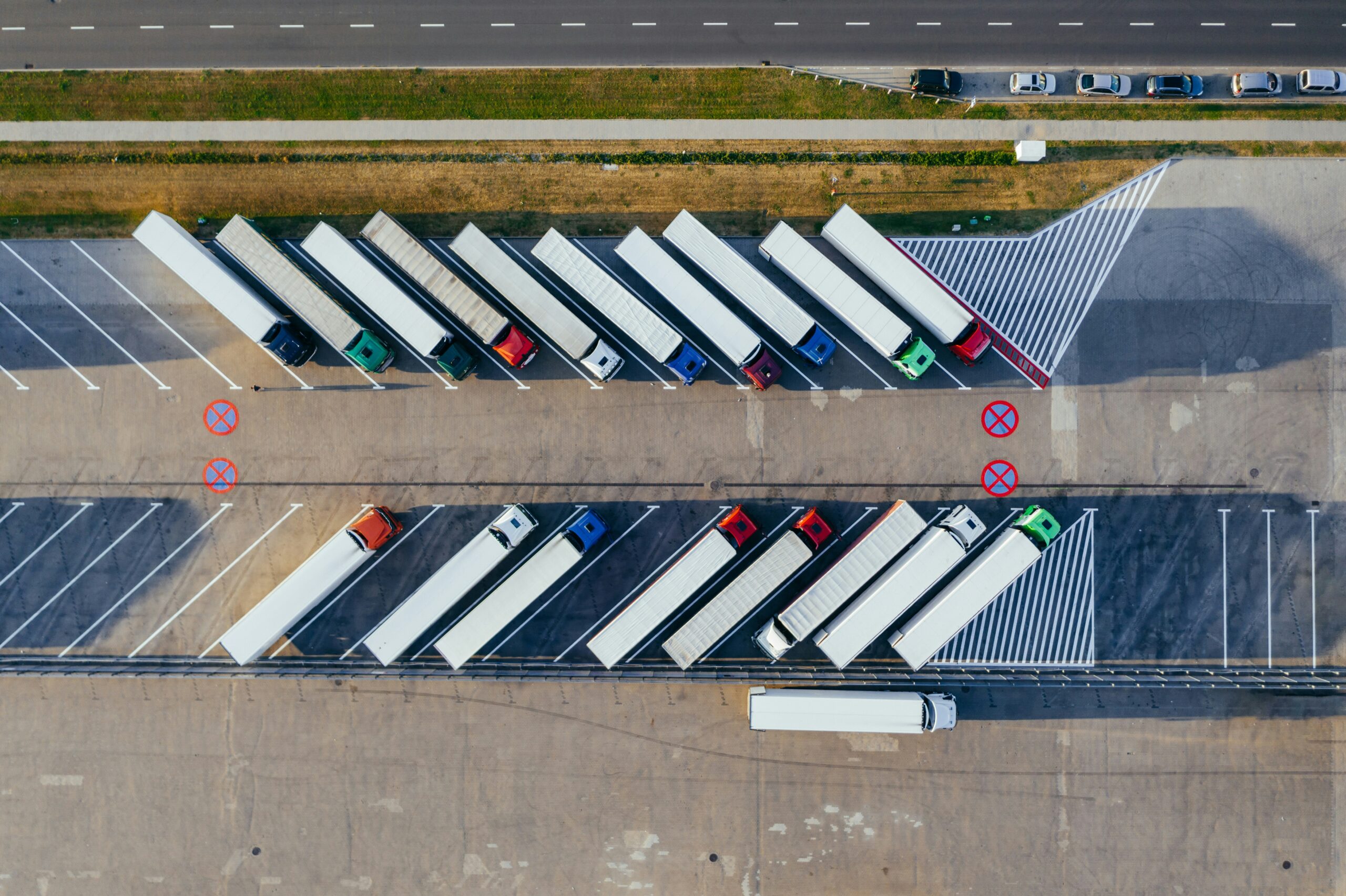
During the pandemic years, the trucking industry experienced something close to a gold rush.
Between 2020 and early 2022, freight rates surged as global supply chains collapsed under pressure. Containers piled up at ports, warehouses ran short of inventory, and suddenly one idea spread across the industry:
“If you have a truck, you can make money.”
For a brief moment, that statement was not entirely wrong.
But markets have long memories and short patience.
By 2026, the industry looks very different.
Today’s trucking market is no longer driven by exceptional freight demand. Instead, it is defined by rising operating costs, shrinking margins, and a brutal process of market consolidation.
Thousands of small carriers have disappeared. Many owner-operators who entered the market during the boom years discovered something too late:
The pandemic profits were never the norm. They were the exception.
The Core Equation of Trucking: Cost per Mile vs Revenue per Mile
At its heart, trucking is a simple business.
Everything revolves around one equation:
Revenue per mile – Cost per mile = Profit
The problem in 2026 is that the spread between those two numbers has become dangerously thin.
According to the latest industry data from the
American Transportation Research Institute (ATRI), the average cost of operating a truck in the United States exceeded $2.25 per mile, the highest level ever recorded.
This cost increase is not caused by a single factor.
It is the result of several structural pressures hitting the industry at the same time.
Major cost drivers include:
- equipment financing
- driver wages
- insurance premiums
- maintenance
- compliance costs
Even more troubling is the trend hidden beneath the surface.
While fuel prices have occasionally softened, non-fuel operating costs continue to rise, pushing the baseline cost of trucking higher every year.
A detailed breakdown published in the
<a href=”https://www.truckingdive.com/news/atri-annual-cost-survey-2025-inflation/752202/” target=”_blank”>ATRI operational cost survey</a> shows that non-fuel costs reached record highs in recent years.
In other words:
Even if diesel becomes cheaper, the structural cost of trucking is still climbing.
Equipment Costs: The Silent Profit Killer
One of the biggest changes in the industry since 2019 is the cost of equipment.
Truck and trailer payments have surged dramatically.
Data from industry reports shows that equipment payments have increased more than 50% since 2019.
Several factors are responsible:
- higher truck manufacturing costs
- supply chain shortages
- rising interest rates
- stricter emissions standards
For new entrants, this creates a dangerous situation.
A truck financed at pandemic-era expectations often carries monthly payments designed for a freight market that no longer exists.
And when rates fall, the math stops working.
The Hidden Metric: Empty Miles
Even experienced drivers often underestimate how much empty miles affect profitability.
In 2024, the average empty mile ratio reached around 16.7% across the industry.
That means nearly one out of every six miles produces zero revenue.
If operating costs are around $2.26 per mile, those empty miles quickly destroy profit margins.
This is why the real skill in trucking is not simply driving more miles.
The real skill is keeping the truck loaded consistently.
The Great Carrier Collapse (2023–2024)
When costs rise and freight demand weakens, the industry goes through a natural correction.
The trucking market experienced exactly that between 2023 and 2024.
According to industry analysis referenced in the
Keynnect Logistics freight market update, tens of thousands of trucking authorities disappeared during this period.
Some estimates suggest:
- more than 30,000 carriers exited the market in 2023 alone
- tens of thousands of additional small operators shut down afterward
The pattern was predictable.
Small carriers with limited cash reserves were the first to fail when spot rates fell below operating costs.
High interest rates made matters worse, especially for operators who had financed equipment during the boom years.
Even Large Companies Failed
The correction was not limited to small carriers.
In August 2023, the trucking giant
Yellow Corporation collapsed after nearly a century in business.
The bankruptcy eliminated around 30,000 jobs and sent shockwaves through the logistics sector.
Around the same time, digital freight startup
Convoy shut down operations, demonstrating that technology alone cannot overcome the fundamental economics of trucking.
Freight transportation remains a capital-intensive, low-margin industry.
Even advanced logistics platforms cannot escape that reality.
The Spot Market Illusion
Many new owner-operators rely heavily on the spot market.
The reason is simple:
Spot loads are easy to access through load boards.
But convenience does not equal stability.
According to recent market data summarized by
Dynamic Logistix freight rate analysis, average spot rates in early 2026 were approximately:
- Dry Van: $2.39 – $2.42 per mile
- Reefer: $2.78 – $2.90 per mile
- Flatbed: $2.66 – $2.70 per mile
At first glance, those numbers look encouraging.
But there is a critical detail most newcomers overlook.
Spot rates are not rising because freight demand exploded.
They are rising because thousands of trucks left the market.
Supply shrank faster than demand.
This means the rate increases are not necessarily a sign of strong industry health.
They are the aftershock of a painful correction.
Regional Freight Imbalances
Another risk for spot market operators is regional volatility.
Freight rates can vary dramatically depending on location.
For example, while the national dry van average may hover above $2.40 per mile, some regions occasionally drop to $1.60–$1.90 per mile.
Drivers who enter those markets without secured outbound loads may face a difficult choice:
- deadhead hundreds of miles
- accept a loss-making load
Either option erodes profitability.
This is why experienced carriers emphasize network relationships over pure spot market dependence.
New Variables Reshaping Trucking in 2026
Beyond cost pressures, the trucking industry now faces several structural shifts.
These include:
1. Regulatory Changes
New compliance requirements and licensing rules have begun affecting driver availability.
Some industry analysts estimate that regulatory changes impacting non-resident commercial driver licenses could influence hundreds of thousands of drivers across the market.
Reduced driver supply may tighten capacity and increase rates, but it also adds complexity for smaller carriers.
2. Nearshoring and the Mexico Freight Boom
Global supply chains are shifting toward nearshoring.
Manufacturing is increasingly moving closer to the United States, particularly into Mexico.
As a result, cross-border freight has surged.
The Texas border city of
Laredo has become one of the busiest freight gateways in North America, handling a massive share of truck traffic entering the United States.
For carriers with the right networks, this shift creates new opportunities.
For everyone else, it simply changes where the freight moves.
3. Insurance and Legal Risk
Insurance costs continue to rise due to a phenomenon known as “social inflation.”
Large legal settlements—sometimes called “nuclear verdicts”—have dramatically increased liability exposure for trucking companies.
As a result, insurers have raised premiums or tightened underwriting requirements, particularly in high-litigation states.
For small carriers, insurance alone can determine whether a business survives.
The Real Competitive Advantage in Trucking
The biggest misconception about trucking is that it is primarily about trucks.
In reality, successful carriers rarely compete on equipment alone.
Their advantage comes from three things:
1. Cost Discipline
They understand their exact cost per mile and refuse loads that fall below profitability thresholds.
2. Relationship Capital
They maintain stable relationships with brokers and shippers rather than relying entirely on volatile spot markets.
3. Data-Driven Decisions
Modern carriers track metrics such as:
- load-to-truck ratios
- regional demand shifts
- seasonal freight patterns
The trucking business increasingly resembles a data and logistics optimization problem, not simply a driving job.
The Hard Truth About the Trucking Business
The pandemic boom created a powerful illusion.
For a short period, it seemed like trucking had become an easy path to entrepreneurship.
But the industry has returned to its historical norm.
High capital requirements.
Thin margins.
Relentless competition.
In trucking, survival is rarely determined during the boom years.
It is determined during the downturns.
Those who remain profitable today share one trait above all:
They treat trucking not as a gamble, but as a disciplined business.
And in the end, the market always asks the same question.
Not how fast you entered the industry.
But whether your numbers make sense.