Port Houston reefer policy shows how ports now price speed over storage, creating risks and opportunities for Korean exporters and logistics investors.
Port Houston reefer policy marks more than a tariff adjustment; it signals how major gateways are redesigning terminal economics in an era when port capacity matters more than nominal throughput. The immediate change is narrow—shorter free time for loaded import refrigerated containers requiring power at Barbours Cut and Bayport—but the underlying logic is broad. Ports no longer want to subsidize dwell time for cargo owners when congestion risk, labor costs, and vessel schedule volatility have turned yard space into a premium asset.
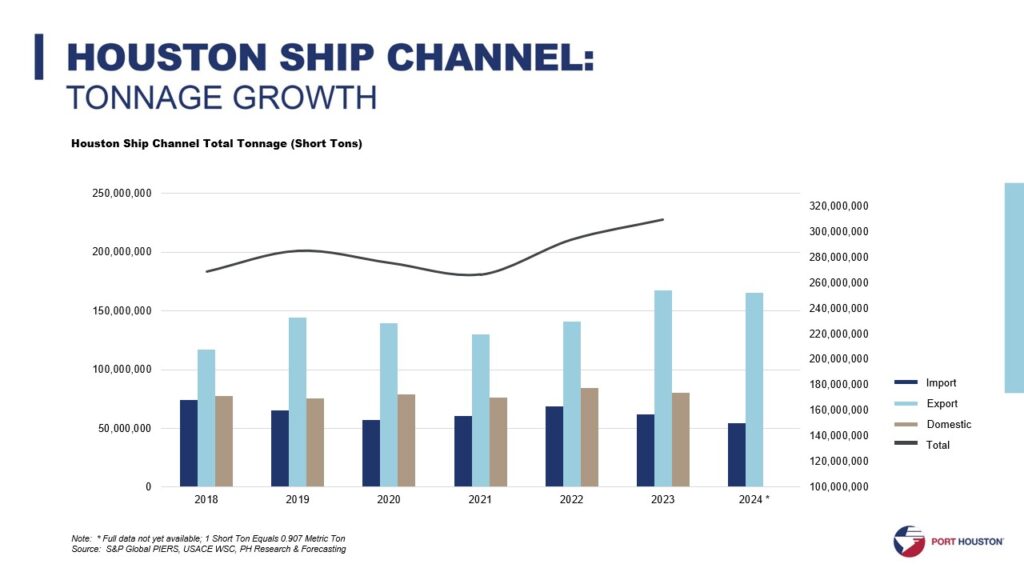
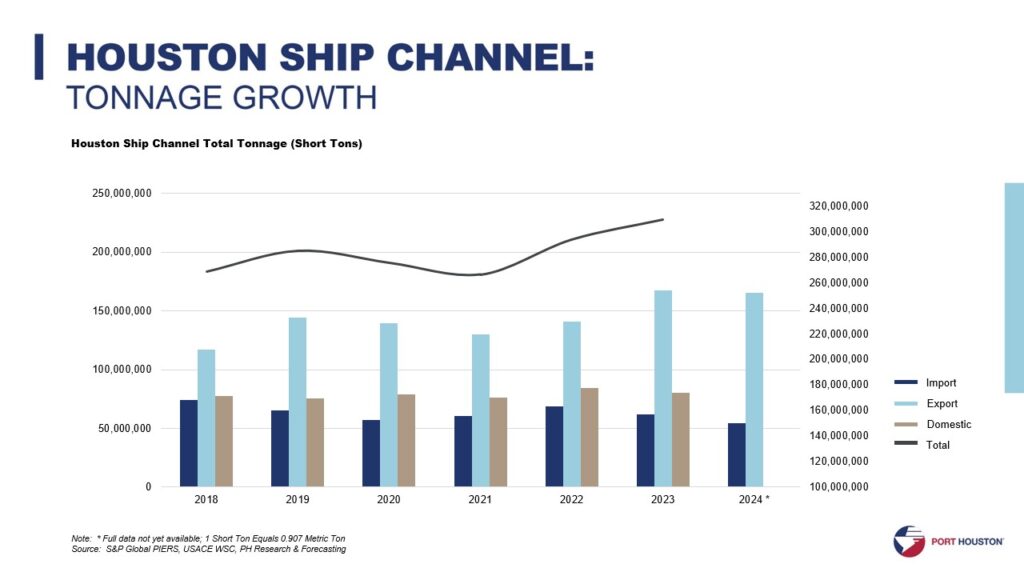
That matters because Port Houston is not a marginal node. It handled 4.38 million short tons in February, up 4% year on year, while container volumes stayed effectively flat at 326,799 TEUs. The data reveals a structural shift: when tonnage rises but TEUs stagnate, port managers become less focused on volume vanity metrics and more focused on velocity, berth productivity, and revenue quality.
For Korean exporters, cold-chain operators, and shipbuilding strategists, this is not simply a Gulf Coast local story. It demonstrates how inland demand resilience, infrastructure expansion, and stricter terminal rules are converging to reward supply chains that move faster and punish those that use ports as low-cost storage. That distinction will shape vessel deployment, reefer logistics contracts, and terminal bargaining power over the next cycle.
Port Houston reefer policy reflects a wider shift from storage to throughput
The most revealing line in this episode is not about tariffs. It is the port’s explicit preference to operate as a transit facility rather than a storage facility. That distinction exposes the commercial reality of modern terminals: yard slots with power connections for reefer boxes are no longer passive infrastructure. They are scarce, monetizable operating capacity.
When a port shortens free time for refrigerated imports, it is effectively repricing delay. Shippers that relied on terminal dwell as a buffer against warehouse constraints or inland transport mismatches now face a direct cost signal. Market incentives dictate that once reefer dwell becomes more expensive, cargo owners either improve landside coordination or absorb margin compression.
This is especially rational in Houston. The port’s year-to-date container volume reached 696,833 TEUs, up 2%, while loaded exports rose 5% and loaded imports increased 3%. Those are not explosive growth rates. Yet in a system already dealing with fog delays, schedule irregularity, and tighter operating windows, even modest import growth can create acute pressure on specialized terminal assets such as reefer plugs, inspection areas, and truck gates.
The global backdrop reinforces the logic. UNCTAD Review of Maritime Transport 2024 highlights that rerouting has increased global container ship demand by 12%, intensifying pressure on ports even when trade growth appears manageable on paper. The lesson is clear: port stress no longer comes only from headline cargo surges; it also comes from network inefficiency imported from elsewhere.
For Korean businesses exporting food, chemicals, pharmaceuticals, or temperature-sensitive components into the U.S. Gulf, Port Houston reefer policy should be read as a pricing mechanism for reliability. If your inland partner cannot collect cargo quickly, the port will now force that inefficiency back onto your balance sheet.
Infrastructure expansion strengthens Port Houston’s pricing power
At first glance, stricter free-time rules might seem contradictory at a port that is expanding. In fact, expansion and stricter rules usually arrive together. Capacity investment gives ports confidence to demand operational discipline, because they can argue that the system is being upgraded for users who move cargo efficiently rather than for users who warehouse cargo on terminal land.
Houston’s position illustrates this well. Project 11 widened the Galveston Bay reach from 530 to 700 feet, improving access for 15,000-17,000 TEU vessels and removing daylight transit restrictions that had constrained flexibility. That translates into as much as 2.5 additional operational hours per day. Meanwhile, the approved construction of Wharf 1 at Bayport will add 1,300 linear feet of berth space by 2028 via Port Houston volume and berth expansion data.
Those investments do more than accommodate bigger ships. They alter bargaining power across the logistics chain. A deeper, wider, more flexible channel attracts larger services and denser call windows. Once that happens, terminal operators become less tolerant of low-yield yard occupancy. This divergence exposes a fundamental tension: cargo owners want optionality, while ports monetize predictability.
There is also a strategic implication for vessel economics. If Gulf calls become more operationally efficient but landside pickup rules tighten, carriers and beneficial cargo owners may reconfigure which cargo moves direct, which cargo transships, and which commodities deserve reefer equipment allocation. In other words, infrastructure does not simply expand trade; it sorts trade by time sensitivity and margin.
This has resonance for Korea’s export economy. Korean manufacturers often compete on delivery precision as much as product quality. A market where major U.S. gateways reward speed over buffer inventory favors exporters with stronger 3PL coordination, digital documentation, and inland distribution visibility. It disfavors firms that still treat port arrival as the end of the logistics problem.
Port Houston reefer policy offers a signal for shipowners, cold-chain operators, and Korean industry
Three mechanisms drive this shift. First, reefer cargo creates higher infrastructure intensity because it consumes powered slots and monitoring resources. Second, weather and network disruption make port planners value rapid box evacuation more than raw volume accumulation. Third, gateway competition increasingly depends on turn-time credibility rather than simple tariff competitiveness.
That is why Port Houston reefer policy should be read alongside the growth of battery-powered vehicle handling rules. Both changes indicate a port authority managing not just more cargo, but more operational complexity. Cargo categories with special safety, power, or handling requirements are consuming a larger share of terminal attention. The cost of complexity is now being allocated more explicitly.
For shipowners and logistics investors, this matters because complexity pricing tends to spread. Once one major port normalizes stricter reefer dwell discipline, peer ports gain cover to do the same. That can reshape contract structures for cold-chain shippers, increase the value of off-dock cold storage, and strengthen the case for integrated logistics providers over fragmented transport chains.
For Korean shipyards, the implication is indirect but material. If U.S. cold-chain networks tighten around faster port evacuation and more predictable inland transfer, vessel owners may place greater value on containership designs that improve schedule integrity, reefer slot optimization, and fuel efficiency on secondary routes. That is one reason specialized boxship segments deserve closer attention, as explored here: Related Analysis: High Reefer Containerships: Why Korean Yards Are Missing the $92.7M Cold Chain Opportunity.
💡 Checkpoints for Korean Maritime/Shipbuilding Stakeholders
- Audit U.S. Gulf cold-chain exposure and identify customers relying on terminal free time as an informal storage buffer.
- Reprice logistics contracts to reflect likely increases in reefer storage and demurrage risk after the Port Houston reefer policy takes effect.
- Prioritize inland visibility tools—truck appointment management, customs clearance timing, and warehouse slot booking—to reduce terminal dwell.
- For carriers, evaluate whether Gulf services need revised reefer allocation strategies or tighter documentation cutoffs for temperature-controlled imports.
- For shipyards and marine equipment suppliers, track rising demand for reefer-intensive vessel configurations and cargo monitoring systems tied to schedule reliability.
- For investors, watch whether off-dock cold storage operators and integrated 3PL firms capture margin as ports push storage functions away from the terminal.
💡 Mariecon Insight
Port Houston reefer policy reveals where maritime value is migrating: away from passive infrastructure ownership and toward control over time. The port is using tariff design to convert scarce operational capacity into discipline across the cargo chain. That is not a technical adjustment. It is a power move by a gateway confident enough in its demand base and infrastructure trajectory to dictate behavior.
For Korean B2B markets, the warning is straightforward. Exporters that still compete with loose inland coordination will see logistics friction erode margin in the U.S. Gulf. The opportunity is equally clear. Firms that combine product exports with high-reliability logistics, cold-chain planning, and digital cargo orchestration will gain share as American gateways become less forgiving of delay.
My expectation is that similar policies will spread across specialized cargo segments at major ports over the next 12 to 24 months. Stakeholders should not ask whether free time is becoming more expensive. They should ask a more strategic question: in a logistics system increasingly priced by velocity, who controls the handoff after the ship arrives?