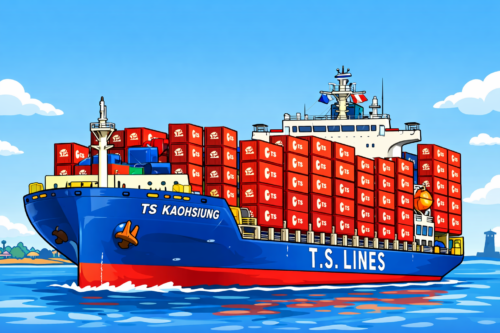
TS Lines fleet expansion shows why feeder vessel control is becoming strategic infrastructure for intra-Asia shipping and Korean maritime decision-makers.
TS Lines fleet expansion is not merely a carrier adding ships; it signals how regional shipping is being rebuilt around ownership, yard relationships, and control over cost volatility. Intra-Asia operators no longer treat feeder tonnage as a flexible appendage to charter markets. They increasingly treat it as strategic infrastructure. That shift matters for Korea because it reveals where the next layer of container competition will be decided: not on headline mega-ships, but in the dense regional networks that feed them.
TS Lines has committed $168.6m for four additional 2,900 TEU containerships at Fujian Mawei, extending a series that now totals six vessels. Market analysts observe that this is part of a broader capital allocation strategy rather than a one-off capacity purchase. The company is effectively locking in future operating control across intra-Asia lanes, where schedule reliability and vessel availability often matter more than nominal scale.
The deeper structural shift is this: regional carriers are using newbuild orders to reduce dependence on volatile charter markets while building competitive moats in secondary trade lanes. That logic strengthens when Asia still handles 63% of global container traffic, as shown in the UNCTAD Review of Maritime Transport 2024. If trade growth remains positive through 2029, the owners with the right feeder assets in the right windows will command pricing power far beyond their fleet size.
TS Lines fleet expansion and the new logic of feeder control
At first glance, a 2,900 TEU order looks modest in an era dominated by ultra-large container vessels. That reading misses the market’s real pressure points. Intra-Asia shipping depends on frequency, port flexibility, and network resilience, all of which are better served by modern feeder and sub-panamax tonnage than by oversized assets chasing theoretical economies of scale.
TS Lines, ranked 20th globally with about 106,252 TEU of fleet capacity, occupies a position where strategic discipline matters more than size alone. Its latest commitment brings the total six-vessel 2,900 TEU series at Fujian Mawei and Xiamen-linked facilities to $252.9m, with deliveries spread from mid-2028 to May 2029, as reflected in corporate transaction disclosures tracked by TipRanks company announcement coverage. This delivery profile indicates deliberate timing: the company is placing capacity into a period when environmental compliance costs and charter market uncertainty are likely to tighten effective supply.
The yard choice is equally revealing. TS Lines has worked with Fujian Mawei since 2021, building not just ships but a procurement ecosystem. Repeated orders reduce design friction, support financing visibility, and strengthen bargaining leverage over specifications and delivery schedules. What appears to be a fleet renewal program is also a supply-chain integration strategy.
For Korean readers, this presents an uncomfortable truth. Korea dominates high-value shipbuilding categories, yet much of the regional feeder replacement cycle is consolidating around Chinese yards that offer acceptable technology at lower cost and stronger local industrial alignment. Korea’s shipbuilding strength does not automatically translate into capture of the most strategically important replacement segments.
Why TS Lines fleet expansion matters beyond one carrier
Three mechanisms drive the significance of this move. First, ownership reduces exposure to charter-rate spikes, which have repeatedly distorted operating economics for regional carriers. A carrier with more owned tonnage can defend margins and preserve service integrity when spot vessel supply tightens.
Second, new ships improve fuel performance and regulatory optionality. Even without dramatic propulsion breakthroughs, a modern 2,900 TEU design can produce lower bunker consumption per slot and offer a better platform for future compliance adjustments under tightening carbon rules, including IMO decarbonization measures and regional regimes such as the EU ETS. In practice, that means lower lifecycle cost and greater deployment flexibility.
Third, fleet standardization sharpens network economics. Similar vessels simplify crewing, maintenance planning, spare parts management, and schedule deployment. For a carrier focused on intra-Asia loops, these operating disciplines can matter as much as freight rates.
UNCTAD projects average annual container trade growth of 2.7% through 2029. That is not explosive, but it is enough to reward carriers that replace aging ships before the market fully prices in environmental compliance and port-side congestion costs. The data points toward a market where the winning strategy is not maximum expansion, but selective ownership of efficient mid-sized vessels in high-frequency regional trades.
That logic also reshapes competition among shipbuilders. Chinese yards are not simply selling cheaper hulls; they are embedding themselves into the fleet strategies of regional carriers. Once these relationships deepen, future orders become easier to repeat, financing becomes more predictable, and switching costs rise. What if this is not about price, but about power over the next decade of replacement demand?
The Korean shipping and shipbuilding implication
For Korean shipowners, TS Lines fleet expansion demonstrates that the feeder segment deserves more serious strategic attention. Korean firms often focus analytical energy on deepsea mainline trades, LNG carriers, and premium asset classes. Yet regional container networks are where cargo resilience, transshipment relevance, and trade diversification increasingly intersect.
For Korean shipyards, the signal is sharper. If Chinese builders continue capturing repeat feeder orders from Asian carriers, Korea risks ceding not just volume but long-term influence over standard vessel design in regional container shipping. That would weaken exposure to a segment likely to benefit from fleet renewal and from the reconfiguration of Asian manufacturing supply chains.
For investors, the key metric is not simply orderbook size but the newbuild-to-fleet ratio relative to network specialization. TS Lines is building owned-fleet self-sufficiency while also ordering larger 5,000–5,300 TEU vessels elsewhere for 2028-2029 delivery. That reveals a two-tier strategy: defend feeder density while selectively scaling trunk routes. Carriers that balance these layers well will likely outperform those still relying excessively on short-term chartered tonnage.
This dynamic also intersects with Korean export strategy. As supply chains fragment across Southeast Asia, demand for reliable intra-Asia connectivity rises. The carriers and yards that dominate this middle layer will influence freight pricing, delivery certainty, and ultimately the competitiveness of export manufacturers. Related Analysis: High Reefer Containerships: Why Korean Yards Are Missing the $92.7M Cold Chain Opportunity
[Suggested Chart: TS Lines orderbook breakdown by vessel size, delivery year, and strategic route role versus projected intra-Asia container trade growth through 2029]
💡 3 Key Checkpoints for Korean Maritime/Shipbuilding Stakeholders
- Reassess feeder exposure: Korean shipowners should review whether their owned-to-chartered ratio in the 1,700-5,000 TEU segment leaves them vulnerable to the next charter-rate cycle.
- Build a competitive standard-feeder offering: Korean yards need modular, fuel-efficient feeder designs with faster commercial turnaround, not just premium engineering for top-tier sectors.
- Track yard-carrier relationship risk: Investors and policymakers should monitor repeat ordering patterns at Chinese regional yards, because these relationships can lock in future market share before headline capacity data makes the shift obvious.
💡 Mariecon Insight
TS Lines fleet expansion reveals a structural contest over who controls Asia’s maritime middle mile. The largest gains in the next cycle may not accrue to the carriers with the biggest ships, but to those that own the most efficient regional connectors. That creates both a warning and an opportunity for Korea.
The warning is straightforward: if Korean yards remain concentrated in high-spec segments while Chinese yards consolidate feeder-series orders, Korea may preserve prestige but lose strategic breadth. The opportunity lies in recognizing that intra-Asia tonnage is no longer a low-status market. It is becoming a decisive layer of trade infrastructure as Asian sourcing patterns diversify and environmental regulation raises the premium on modern ships.
For Korean B2B exporters, this suggests a practical framework. Watch feeder fleet renewal as closely as deepsea freight indices. The companies that secure reliable regional vessel access will gain an edge in inventory planning, transshipment stability, and customer delivery performance. By 2028-2029, TS Lines fleet expansion may look less like a fleet purchase and more like an early claim on the operating architecture of Asian trade.